Beginner Japanese/Kanji
Lesson[edit | edit source]
 Kanji (漢字) (help·info) are the logographic characters of the Japanese language. They are based on the Chinese Hanzi and to some degree are mutually readable, but there are some major differences as well. In fact, guessing the meaning of a kanji based on its Chinese meaning can be misleading.
The kanji do not convey the entire meaning of a word, but its base meaning. Its grammatical use is determined by the surrounding particles and the following kana determine its tense. Also, Japanese does not have a Kanji for every word, especially ones borrowed from English or other Western languages. Nevertheless, to understand the Kanji is at the heart of understanding the Japanese language, and if you cannot read the Kanji, at least at a basic level, the large numbers of homonyms in Japanese can cause much confusion.
Readings[edit | edit source]
A single Kanji can be read (pronounced) in many different ways, depending on its context. These readings are categorized into two groups - that of Chinese origin
It is often the case that a Kanji has more than one reading of Chinese origin. This is because the importing of Chinese letters (with their readings) did not occur just at one time from one region. To help figure out how to pronounce a kanji, kana is printed next to a kanji like in this example:
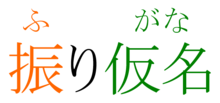
The hiragana over the kanji tell you that this word should be pronounced ふりがな

When kana is printed next to a kanji, like above, it is called furigana.
On yomi[edit | edit source]
It may be useful to note that in some Kanji databases, the on reading is written in Katakana instead of Hiragana.
Kun yomi[edit | edit source]
This reading generally will be written in Hiragana in Kanji lists.
Nanori[edit | edit source]
The 康 read as やす (yasu; as in 徳川家康) and the 信 read as のぶ (nobu; as in 織田信長) are both written in 名乗り読み (nanori yomi).
Kanji Repetition[edit | edit source]
The 々, or ノマ (noma) symbol indicates the repetition of a Kanji. An example of a repetition is wareware
Some useful kanji[edit | edit source]
| Kanji | Meaning(s) | Examples |
| 一 | one | 一 ichi (one), 一つ hitotsu (one piece), 一人 hitori (one person) |
| 二 | two | 二 ni (two), 二つ futatsu (two pieces) |
| 三 | three | 三 san (three), 三つ mittsu (three pieces) |
| 人 | person | 人 hito (person), 日本人 Nihonjin (Japanese person) |
| 口 | mouth | 口 kuchi (mouth), 人口 jinkō (population) |
| 目 | eye | 目 me (eye), 一つ目 hitotsu-me (the first piece), 目的 mokuteki (purpose) |
| 木 | tree | 木 ki (tree), 木曜日 mokuyōbi (Thursday) |
| 森 | forest | 森 mori (forest), 森林 shinrin (woods and forests) |
| 山 | mountain | 山 yama (mountain), 富士山 Fujisan (Mount Fuji) |
| 川 | river | 川 kawa (river) |
| 日 | sun | 日 hi (the sun), 日曜日 nichiyōbi (Sunday) |
| 月 | moon | 月 tsuki (the moon), 月曜日 getsuyōbi (Monday) |
| 年 | year, age | 年 toshi (year, age), 去年 kyonen (last year) |
| 本 | book | 本 hon (book), 日本 Nihon/Nippon (Japan) |
| 明 | bright | 明るい akarui (bright), 明日 asu (tomorrow) |
| 行 | to go | 行く iku (to go), 銀行 ginkō (bank) |
| 来 | to come | 来る kuru (to come), 来週 raishū (next week) |
| 私 | I, me, private | 私 watashi (I, me), 私立大学 shiritsu daigaku (private university) |
| 男 | male | 男の人 otoko no hito (man), 男性 dansei (man) |
| 女 | female | 女の人 onna no hito (woman), 彼女 kanojo (she, her, girlfriend) |
| 母 | mother | 母 haha (one's own mother), お母さん okāsan (someone else's mother) |
| 父 | father | 父 chichi (one's own father), お父さん otōsan (someone else's father) |
| 車 | car | 車 kuruma (car), 電車 densha (train) |
| 食 | eat | 食べる taberu (to eat), 食事 shokuji (meal) |
| 入 | enter | 入る hairu (to enter), 入学 nyūgaku (admission to a school) |
| 出 | come out | 出る deru (to come out), 出口 deguchi (exit), 出発 shuppatsu (departure) |
| 学 | learn | 学ぶ manabu (to learn), 学生 gakusei (student), 学校 gakkō (school) |
| 先 | ahead, previous | 先に saki ni (on ahead), 先生 sensei (teacher), 先月 sengetsu (last month) |
| 生 | live, birth | 生きる ikiru (to live), 生まれる umareru (to be born) |
| 金 | gold, money | 金 kin (gold), お金 o-kane (money), 金曜日 kinyōbi (Friday) |
| 上 | top, above | 上 ue (top, above), 上がる agaru (to go up), 上手 jōzu (skillfull) |
| 下 | bottom, below | 下 shita (bottom, below), 下がる sagaru (to go down), 地下 chika (basement) |
| 中 | inside, middle | 中 naka (inside, middle), 中国 Chūgoku (China) |
| 水 | water | 水 mizu (water), 水曜日 suiyōbi (Wednesday) |
| 土 | soil | 土 tsuchi (soil), 土地 tochi (land), 土曜日 doyōbi (Saturday) |
| 火 | fire | 火 hi (fire), 火曜日 kayōbi (Tuesday), 火山 kazan (volcano) |
| 大 | big | 大きい ōkii (big), 大学 daigaku (university) |
| 小 | small | 小さい chīsai (small), 小学生 shōgakusei (elementary school student) |
| 犬 | dog | 犬 inu (dog), 番犬 banken (watchdog) |
| 高 | expensive, tall | 高い takai (expensive), 高校 kōkō (high school) |
| 安 | cheap, peaceful | 安い yasui (cheap), 安心 anshin (peace of mind) |
| 右 | right | 右 migi (right), 右折する usetsu suru (to turn right) |
| 左 | left | 左 hidari (left), 左右 sayū (left and right) |
| 円 | circle, yen | 円 en (circle, yen), 円周 enshū (circumference) |
| 長 | long, chief | 長い nagai (long), 校長 kōchō (principal) |
| 朝 | morning | 朝 asa (morning), 朝食 chōshoku (breakfast) |
| 昼 | noon, daytime | 昼 hiru (noon, daytime), 昼食 chūshoku (lunch) |
| 晩 | evening | 晩 ban (evening), 今晩 konban (tonight) |
| 時 | hour | 時 toki (time), 時間 jikan (time) |
| 分 | minute | 分かる wakaru (to understand), 5分 go-fun (five minutes) |
Further reading[edit | edit source]
External resources[edit | edit source]